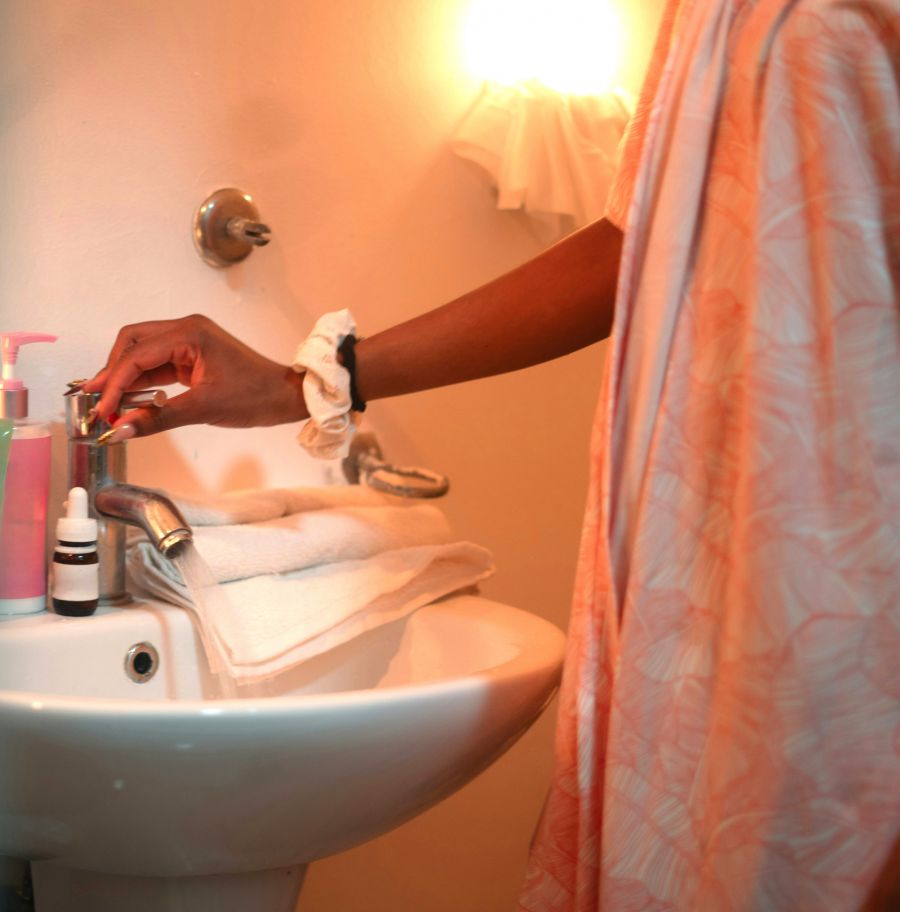
Turn off the water when you brush your teeth?
Take shorter showers?
Water the lawn less and less?
Let farmers suffer and orchards die under strict water restrictions?
The Okanagan is already in drought and today is United Nations' World Drought Day -- a time to reflect on just how serious the problem is and whether you're willing to change your lifestyle to do anything about it.
It may not look like the Okanagan is in a drought.
Creeks and rivers continue to flow.
Okanagan Lake glitters in all its 100-kilometre-long glory.
There's even been rain the the past couple of weeks.
Water comes out of the tap when you turn it and the toilet flushes.
However, the snowpack in the mountains this past winter was only about 60% of normal -- a six-decade low in some cases.
By June 1, snowpack was a critically low 2% of normal.
The Okanagan depends on sowpack to melt in the spring, fill creeks and rivers that flow into lakes, top up reservoirs and soak the watershed.
With that not happening so much this spring, municipal water providers have sprung into action with water restrictions.
The most drastic is Greater Vernon Water asking agricultural users to cut back by 70%.
Apple and cherry growers are panicking and say such a move will not only jeopardize this years crop, but will kill fruit trees.
The province pegs the Okanagan at the highest-possible drought level 5, the only region of BC with the dubious distinction.

The City of Kelowna has stage 1 and 2 water restrictions in place in its 4-stage system.
Stage 1, covering the city water utility and Glenmore-Ellison Improvement District, is the standard conservation ask of people at odd numbered address to only water their lawn on Tuesdays, Thursdays and Saturdays, even numbered addresses on Wednesdays, Fridays and Sundays.
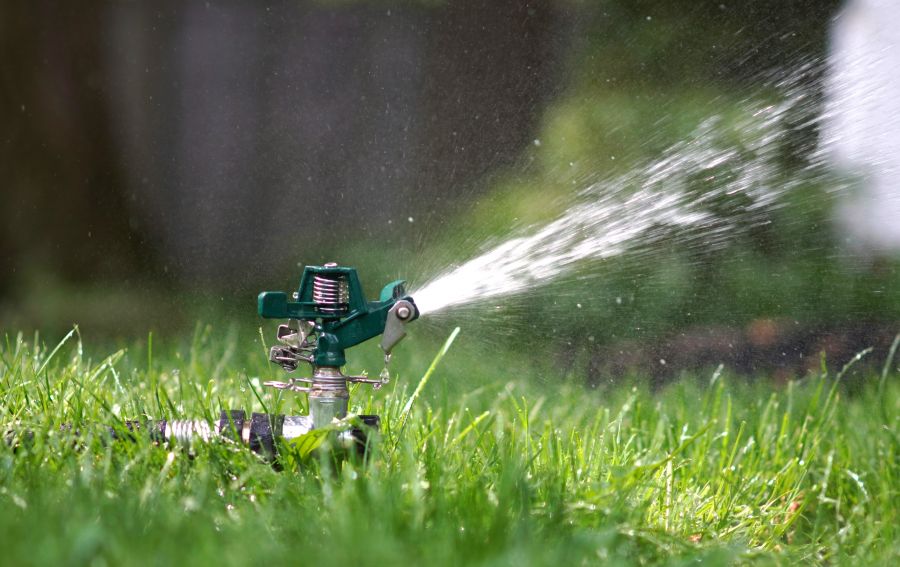
Automatic irrigation can only run between midnight to 6 am, manual sprinklers can be turned on between 6 am and 10 am and 7 am and midnight.
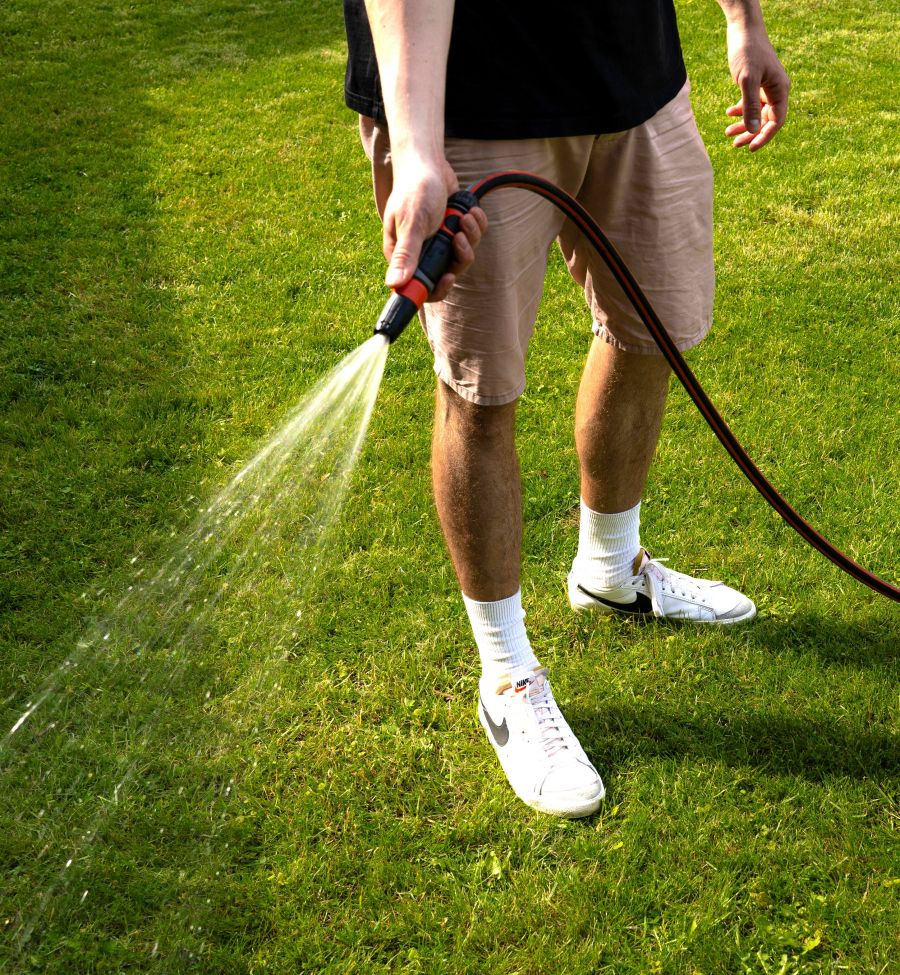
Watering by hand can be done anytime.
Stage 2 restrictions to use 20% less water apply to customers (including farms) of the McCulloch Lake Reservoir and District of Lake Country water system.
If Kelowna goes to stage 3 -- serious conservation of 30 to 35% -- lawn watering would only be allowed one day a week and washing your car in the driveway would be prohibited.
Stage 4 is critical with no outdoor watering -- basically only water for essential indoor use and firefighting.

"Over the last decade in BC, the water cycle has fundamentally changed," pointed out Coree Tull, chair of the BC Watershed Security Coalition.
The coalition is a non-partisan collective of 50 organizations, including local governments, water experts, farmers and Indigenous groups.
"Drought and water scarcity -- which used to be an anomaly in the past -- is now the new normal in our province," she said.
"Since water is connected to everything -- our survival, our economy, our ecosystem -- we have to be more proactive."
With such a shift in reality, the coalition is calling on the province to take more action.
"The challenge isn't a lack of solutions, it's a lack of delivery," said Tull.
Despite existing tools and commitments to improve watershed security, the province still lacks a coordinated plan to implement them and communities are paying the price."
Solutions definitely include household conservation.
But people turning off the tap while they brush their teeth can only do so much.
Tull said industrial users need to curb their massive usage.
The Okanagan has water metering so people pay for the water they use beyond the norm.
But it was on the few jursidictions in BC to do so.
There must be universal water metering everywhere in the province to compel people, businesses, agriculture and industry to change their ways and conserve more, according to Tull.
"We can sustain the industry and agriculture we have with preventative planning work and more water storage infrastructure," she summed up.