
It’s hard for Chris Overes not to get excited about soccer.
He practically grew up on the soccer field, starting to play in Lynn Valley at age five and continuing on through high school.
“Soccer was what one could afford over hockey, and I’m glad I did because I loved it,” he said.
Now 58, Overes still loves the sport, watching the FIFA World Cup when it comes every four years. So when he saw the opportunity to design a jersey for the səlilwətaɬ (Tsleil-Waututh Nation) with his daughter Tamia Overes, he couldn’t resist.
“Being able to create a jersey is exciting because it’s the world’s biggest sport, so how can one not be overly stoked?” he said.
Designing the jersey is part of a larger initiative for the Tsleil-Waututh, Sḵwx̱wú7mesh (Squamish) and xʷməθkʷəy̓əm (Musqueam) Nations as host nations for the upcoming FIFA World Cup in Vancouver.
The father-daughter artist duo designed the Tsleil-Waututh jersey sleeves, incorporating traditional shapes from past carving work Overes has done. Tamia said she loves the way the design evokes water currents around salmon.
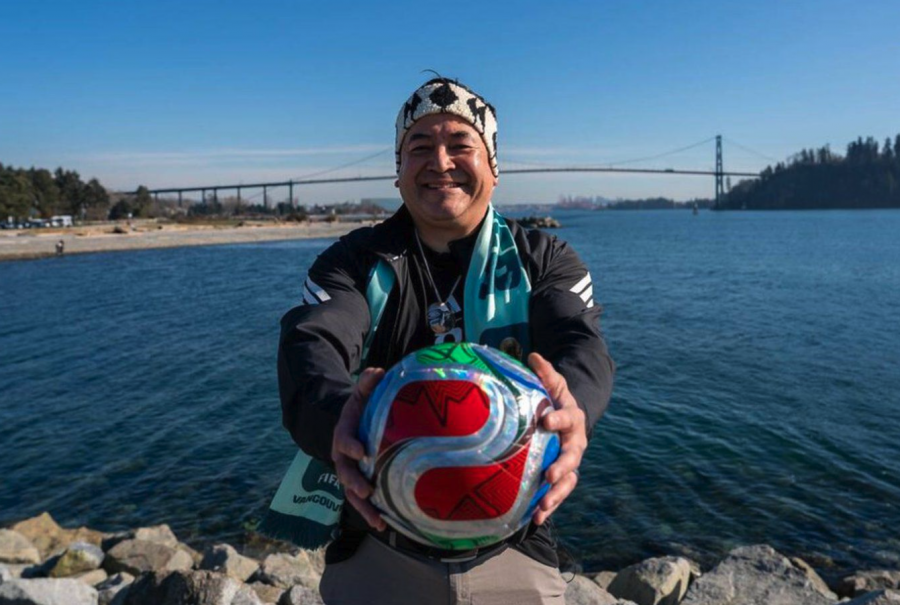
“It’s beautiful for Tsleil-Waututh because we’re people of the Inlet,” she said. “It just means a lot, especially a piece that I was able to complete with my dad and have it shown on that scale.”
səlilwətaɬ is printed in red on the jersey’s body, with emblems on both the front and back. Tsleil-Waututh carver Zac George designed the emblem. He was also responsible for the design of a red and white scarf with the nation’s logo stitched on it.
The jersey and scarf are gifts for the Tsleil-Waututh community, showing their pride while celebrating the World Cup.
While the jersey will stay in the community, more than 1,400 scarves have been given out as gifts to delegates attending the FIFA Congress as well as to other dignitaries coming to Vancouver for the tournament. That gift will reach 211 countries, the nation said.
In June last year, all three nations signed a historic memorandum of understanding (MOU) with the province and City of Vancouver to work together to plan, stage and host the World Cup.
The agreement aims to deliver the global event while honouring Indigenous rights and advancing reconciliation through collaborative efforts, the province said in a news release.
Each nation also received $6 million from the province to go towards planning, staging and hosting the World Cup, along with long-term community legacy projects.
One of those collaborative efforts is the FIFA Fan Festival, a 28-day event taking shape at the PNE grounds.
Along with the watch parties, live music and entertainment on site, the three host nations will have display areas to showcase their history and culture for visitors coming from around the world.
“You get a bit of a visual feel of who we are as peoples. We can’t wait to share the history and our culture with the world,” said Squamish Nation chairperson Sxwíxwtn (Wilson Williams).
Along with the fan fest, Squamish, Tsleil-Waututh and Musqueam artists will also welcome the world through Vancouver’s FIFA World Cup remix, produced by Grayson Repp, and a video created by Indigenous Tourism BC.
“It’s been exciting leading up to the games,” Williams said. “To be official partners in the planning, staging and hosting of the World Cup … it’s been quite important to be at that level, just to be welcomed.”
Including First Nations in the planning of international events like the FIFA World Cup is putting words into action, said Tsleil-Waututh Nation member Charlene Aleck.
“They’re really walking their talk in upholding Indigenous rights and governance,” Aleck said. “You see our culture being represented in places they’ve never been recognized before.”
A precedent was set in the 2010 Winter Olympics, where the Squamish, Tsleil-Waututh, Musqueam and Lil-wait Nations were involved in the planning, staging and hosting of the international games, Williams said, and he is happy to see the same path with the World Cup.
“It’s a huge step into international reconciliation, when we’re inviting the world at this level,” Williams said. “It empowers other cultures and ethnicities.”
Both Chris and Tamia Overes share that sentiment too.
“I think any light that we can get to help people understand our traditions and cultures is a good light,” Overes said.
Abby Luciano is the Indigenous and civic affairs reporter for the North Shore News. This reporting beat is made possible by the Local Journalism Initiative.